Introduction
In this blog post, we will explore the multifaceted role of transportation in logistics, highlighting its critical importance in the supply chain, the various modes available, and the trends shaping its future. Understanding these aspects can help organizations optimize their logistics strategies for greater efficiency and sustainability.
As companies strive to meet consumer demands, the transportation sector must adapt to emerging challenges and opportunities. For instance, the rise of e-commerce has significantly altered logistics expectations, compelling businesses to enhance their transportation capabilities to ensure rapid delivery times.
Furthermore, the integration of technology in transportation logistics has created a more connected and efficient supply chain. Real-time tracking systems, predictive analytics, and automated routing are just a few examples of how technology enhances the transportation process, leading to improved operational efficiencies.
To further illustrate the key benefits of effective transportation in logistics, let’s delve deeper into each of them, discussing real-world examples and the impact they have on business operations.
Timely delivery → Meeting customer expectations is vital in today’s competitive landscape. For instance, a company like Amazon has set a benchmark with its two-day delivery service, which has raised consumer expectations significantly.Cost efficiency → Optimizing routes reduces expenses. Companies utilizing route optimization software can save thousands in fuel and labor costs. For example, UPS employs advanced algorithms to determine the most efficient delivery routes, significantly cutting fuel consumption.Market expansion → Access to global customers is imperative. Companies with robust transportation networks can easily reach international markets, enhancing their global presence.Risk management → Reliable transport minimizes disruptions. For instance, having multiple transportation options, such as air and sea, helps companies mitigate risks associated with delays.Next, we will explore the various modes of transportation used in logistics, analyzing their advantages and disadvantages, and how they fit into the broader logistics strategy.
Road transport remains the most flexible and widely used mode for moving goods locally. However, it faces challenges such as congestion and regulatory hurdles. Innovations like smart traffic management systems are being deployed to alleviate these issues.
For instance, companies implementing advanced transportation management systems (TMS) can analyze route performance data in real-time, allowing for more informed decision-making that leads to increased operational efficiency. This integration can significantly reduce shipping delays, ensuring that products are delivered to customers when promised, thus enhancing customer satisfaction.
Moreover, the integration of multimodal transport solutions—such as combining road, rail, air, and sea—allows businesses to optimize transport costs while maintaining flexibility and reliability. By utilizing multiple modes of transportation, companies can adapt to market demands and fluctuations, ensuring they can meet consumer needs effectively.
Modern logistics heavily relies on supply chain visibility, and transportation plays a critical role in achieving this. Advanced technologies such as GPS tracking and RFID (Radio Frequency Identification) enable real-time monitoring of shipments, allowing businesses to track their inventory throughout the transportation process. This transparency not only improves operational efficiency but also helps in making proactive adjustments to avoid potential disruptions.
Rail transport, while less flexible than road, is gaining traction for bulk shipments due to its cost-effectiveness and lower environmental impact. Many companies are investing in rail infrastructure to support their supply chains.
Enhanced supply chain visibility → Improved tracking and monitoring of shipments.Additionally, enhanced visibility allows companies to manage their inventory levels more effectively, reducing holding costs and minimizing stockouts. With accurate tracking information, businesses can adjust their inventory strategies based on real-time data, leading to better alignment of supply with demand.
Understanding the significance of transportation in logistics extends beyond mere movement. It encompasses the optimization of supply chain dynamics, where timely and efficient transportation enhances overall productivity and efficiency across sectors. A robust transportation strategy can lead to substantial cost savings, reduced lead times, and improved service levels, ultimately contributing to a competitive advantage.
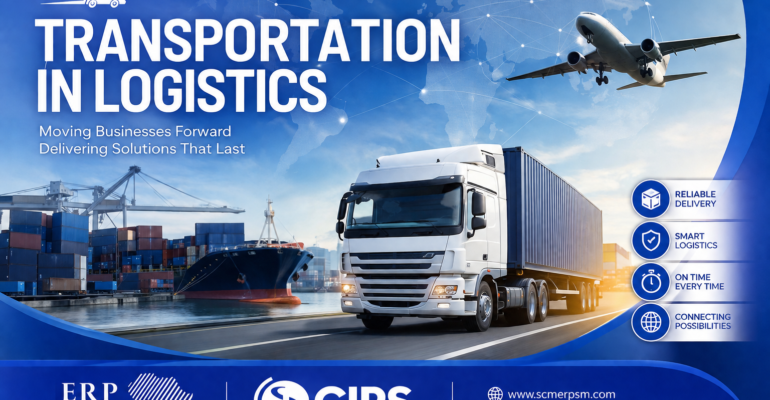
Transportation is the lifeline of logistics. Without efficient movement of goods, even the most advanced supply chain systems collapse. In today’s global economy, transportation is not just about moving items from point A to point B — it’s about speed, cost, sustainability, and customer satisfaction.www.scmerpsm.comWhy Transportation Matters in Logistics
Air transport stands out for its speed, making it essential for industries such as pharmaceuticals, where timely delivery can be critical. Companies are increasingly relying on air freight for high-value goods that require quick transit.
Road transport is particularly favored for its accessibility and flexibility. For small to medium-sized shipments, the ability to reach destinations directly without the need for transloading can significantly reduce transit times. Companies like Amazon have leveraged road transport for rapid last-mile delivery, often utilizing a fleet of delivery vans and trucks, which has become a critical component of their logistics strategy.
In the field of logistics, understanding the various modes of transportation and their unique advantages is essential for optimizing supply chains. Each mode has its specific applications, benefits, and challenges which must be carefully considered when designing a logistics strategy.
Transportation connects suppliers, manufacturers, distributors, and customers. It ensures raw materials reach factories, finished goods reach markets, and e‑commerce parcels reach homes.
Key Benefits
- Timely delivery → Meeting customer expectations.
- Cost efficiency → Optimizing routes reduces expenses.
- Market expansion → Access to global customers.
- Risk management → Reliable transport minimizes disruptions.
Case Study: Effective Use of Rail Transport
Sea transport plays a crucial role in international logistics, especially for large volumes of goods. The efficiency brought by containerization has transformed global trade, allowing for seamless movement of products across oceans.
Rail transport is increasingly gaining traction, especially for bulk commodities. For instance, companies in the mining sector often rely on rail to transport minerals over long distances, taking advantage of the cost efficiencies associated with transporting large quantities. In the United States, coal transportation by rail remains a critical element for energy production, demonstrating how rail networks can significantly lower transportation costs compared to road transport.
The integration of transportation with supply chain management is key to achieving operational excellence. For example, companies that leverage ERP systems can synchronize their logistics operations with other business functions, leading to improved overall performance.
Modes of Transportation in Logistics
Road Transport
Vendor risk management strategies are increasingly important as companies seek to ensure that their transportation partners meet high standards of reliability and sustainability.
As sustainability becomes a core focus, companies are evaluating their transport providers not just on cost, but also on their environmental impact. Sustainable logistics practices are quickly becoming a competitive advantage.
Addressing the challenges in transportation logistics requires a proactive approach. For instance, companies can hedge against fuel price volatility by investing in alternative energy vehicles or adopting more efficient practices.
- Most common for short‑haul and last‑mile delivery.
- Flexible routes, but vulnerable to traffic and fuel costs.
- Example: FMCG companies rely on trucks for daily distribution.
Moreover, infrastructure improvements are critical for facilitating smoother transportation logistics. Collaborations with government entities can lead to better investment in road and port facilities.
Regulatory barriers require companies to stay informed and adaptable. Engaging with industry associations can help businesses navigate these complexities more effectively.
Environmental concerns are prompting a shift toward greener logistics. Companies are exploring eco-friendly packaging and transportation options to minimize their carbon footprint.
Rail Transport
As we move forward, digitalization will play a pivotal role in shaping transportation logistics. The use of AI and IoT can provide unprecedented visibility into supply chain operations, allowing for timely decision-making.
- Ideal for bulk goods like coal, steel, and agricultural products.
- Lower emissions compared to road.
- Strong in regions with developed rail networks.
Sustainability efforts will drive innovation in transportation, with electric vehicles and alternative fuels becoming more prevalent. This shift not only meets regulatory demands but also resonates with environmentally conscious consumers.
Air transport, while the most expensive, offers unmatched speed and is essential for industries where time is critical. For example, the fashion industry often requires urgent shipment of new styles to maintain market competitiveness. Therefore, air freight plays a vital role in ensuring these items reach retail locations promptly, allowing businesses to respond quickly to consumer demands.
Air Transport
- Fastest mode, used for high‑value or urgent goods.
- Expensive, but critical for pharmaceuticals, electronics, and e‑commerce express delivery.
Automation technologies, such as drones and autonomous vehicles, are set to revolutionize last-mile delivery. By reducing labor costs and improving efficiency, they will reshape the transportation landscape.
Sea Transport
Integrated platforms that combine ERP systems with logistics dashboards will provide real-time insights, enabling companies to adapt to changing market conditions quickly and effectively.
Transportation in Logistics is not merely a component of logistics; it’s the backbone that supports the entire supply chain, ensuring goods are delivered on time, at the right place, and in the right condition.
Ultimately, mastering transportation in logistics is essential for achieving supply chain efficiency and customer satisfaction. Companies that prioritize this aspect will likely find themselves ahead in the competitive landscape, setting new standards for service and innovation.
In conclusion, the future of transportation in logistics is bright, characterized by continual improvements and innovations. Organizations that embrace these changes will position themselves for success in an increasingly competitive market.
- Backbone of international trade.
- Cost‑effective for large volumes, but slower.
- Containerization revolutionized global shipping efficiency.
As the global logistics market grows, companies must adapt to maintain a competitive edge, ensuring their transportation strategies are aligned with future trends.Understanding the dynamics of transportation costs is crucial for businesses aiming to optimize their logistics operations and improve profitability.Monitoring e-commerce trends will help businesses predict and prepare for the future demands of last-mile delivery.Sea transport remains the backbone of global trade due to its capacity to handle large volumes. The use of container ships has transformed shipping practices, allowing for efficient loading and unloading processes that drastically reduce turnaround times at ports. Companies such as Maersk have pioneered innovations in container shipping, enhancing logistics efficiency on a global scale.
Transportation is not standalone — it integrates with warehousing, inventory, and procurement.
Integrating Transportation with Supply Chain Management
To fully leverage the benefits of transportation, it is essential to integrate it seamlessly with other components of supply chain management. This integration can lead to better forecasting, improved inventory management, and enhanced customer service. For instance, utilizing an integrated platform that connects transportation processes with inventory systems allows for synchronized operations, ensuring that stock levels are maintained in alignment with delivery schedules.
- ERP systems like SAP HANA track shipments in real time.
- Vendor risk management ensures reliable carriers.
- CIPS procurement frameworks evaluate transport providers for compliance and sustainability.
Challenges in Transportation Logistics
- Fuel price volatility → Impacts cost structures.
- Infrastructure gaps → Poor roads or ports delay shipments.
- Regulatory barriers → Customs clearance slows international trade.
- Environmental concerns → Pressure to adopt green logistics.
Moreover, collaboration with transport providers to establish key performance indicators (KPIs) can help monitor and improve performance. Metrics such as on-time delivery rates and order accuracy provide insight into transportation effectiveness, enabling companies to make informed decisions about operational adjustments and supplier relationships.
Future Trends in Transportation Logistics
Tackling Challenges in Transportation Logistics
Infrastructure gaps also pose a significant challenge, especially in developing regions where transportation networks may be underdeveloped. Companies can mitigate this risk by investing in regional infrastructure projects or establishing partnerships with local governments to improve transportation conditions, thus ensuring smoother logistics operations.
Emerging Trends in Transportation Logistics
As the logistics landscape continues to evolve, several trends are shaping the future of transportation. Digitalization is at the forefront, with advancements in technology driving changes in how transportation is managed. The integration of AI and IoT is revolutionizing route planning and shipment tracking, resulting in increased efficiency and cost reductions.
Despite the advantages, transportation logistics faces numerous challenges that require strategic management. Fuel price volatility, for example, can significantly impact operational budgets, making it critical for businesses to explore fuel-efficient alternatives and negotiate favorable contracts with fuel suppliers.
Sustainability has become a key focus as well. Companies are increasingly adopting electric vehicles and exploring green logistics practices to reduce their carbon footprint. The shift towards sustainable transportation not only meets regulatory requirements but also responds to growing consumer demand for environmentally-friendly practices.
Digitalization
AI route optimization, IoT tracking, blockchain for transparency.
Electric trucks, biofuels, carbon‑neutral shipping.
Moreover, automation is reshaping last-mile delivery, with drones and autonomous vehicles being tested and deployed in various markets. These technologies promise not only to enhance delivery speed but also to address labor shortages in the logistics sector.
Automation
Drones and autonomous vehicles for last‑mile delivery.
Overall, the integration of transportation logistics with digital platforms is set to enhance visibility and coordination within supply chains. Companies adopting integrated logistics dashboards can achieve real-time data insights, thus leading to improved decision-making capabilities.
Integrated Platforms
Statistics That Matter
Finally, the e-commerce boom has driven a remarkable 20% annual increase in demand for last-mile delivery, highlighting the critical role that efficient transportation plays in meeting consumer expectations and supporting business operations.
Conclusion: Embracing Transportation in Logistics
In conclusion, transportation in logistics serves as the backbone of supply chain efficiency. By understanding the intricate dynamics of various transportation modes, integrating technology, and addressing challenges head-on, businesses can position themselves for success in an increasingly competitive landscape. As we continue to adapt to emerging trends and consumer demands, the importance of efficient transportation will only grow, reinforcing its status as an essential component of modern logistics.
To underscore the relevance of transportation in logistics, consider the following statistics. The global logistics market is projected to reach a staggering USD 16 trillion by 2030, reflecting the industry’s continuous growth and adaptation to changing market demands. Transportation costs, which can account for 40–50% of total logistics expenses, emphasize the importance of effective management in this area.
ERP + logistics dashboards for real‑time visibility.
- Global logistics market expected to reach USD 16 trillion by 2030.
- Transportation accounts for 40–50% of total logistics costs.
- E‑commerce growth drives 20% annual increase in last‑mile delivery demand.

Transportation is the lifeline of logistics. Without efficient movement of goods, even the most advanced supply chain systems collapse. In today’s global economy, transportation is not just about moving items from point A to point B—it’s about speed, cost, sustainability, and customer satisfaction. Transportation in logistics plays a critical role in ensuring the timely movement of goods and services. In this context, understanding transportation in logistics can provide a competitive edge in market positioning. Effective transportation strategies can lead to higher customer satisfaction. For instance, companies that prioritize timely deliveries often see increased customer loyalty. In contrast, failures in logistics can lead to customer dissatisfaction and a tarnished brand image. An example of this can be seen in the case of a major retailer that implemented a new logistics software to enhance their supply chain efficiency, resulting in a significant reduction of delivery delays and a corresponding rise in positive customer feedback. Why Transportation Matters in Logistics Moreover, transportation in logistics allows for efficient inventory management and enhances overall supply chain performance. Effective management of transportation in logistics is essential for maintaining supply chain integrity. Furthermore, effective transportation allows businesses to respond swiftly to market demands. For example, during the holiday season, retailers often ramp up their logistics operations to handle the surge in order volume. Efficient transportation systems enable these businesses to adapt to such seasonal changes successfully, thus maximizing sales opportunities. Additionally, the role of technology in enhancing transportation efficiency cannot be overstated. Innovations such as GPS tracking and route optimization software have revolutionized how goods are transported. For instance, a company utilizing advanced routing software can reduce fuel consumption significantly, leading to both cost savings and environmental benefits. Transportation connects suppliers, manufacturers, distributors, and customers. It ensures raw materials reach factories, finished goods reach markets, and e‑commerce parcels reach homes. Key benefits include: Modes of Transportation in Logistics Different modes of transportation in logistics cater to various needs and requirements of businesses. Understanding the nuances of transportation in logistics is vital for effective route planning. 1. Road Transport Road transportation remains the backbone of logistics, particularly for local deliveries. The flexibility of trucks allows for the transportation of goods in a manner suited to the specific needs of businesses. Companies are increasingly investing in fleet management technologies to enhance their road transport efficiency, leading to better route planning and reduced operational costs. 2. Rail Transport Rail transport, as a form of transportation in logistics, offers unique benefits for bulk shipments. 3. Air Transport 4. Sea Transport Role of Transportation in Supply Chain Management Rail transport, while less flexible than road transport, offers significant advantages for bulk goods. For example, transporting coal or agricultural products by rail can be more cost-effective and environmentally friendly compared to road transport. The rise of intermodal transport, where goods are transferred between rail and trucks, is enhancing the efficiency of rail logistics. Transportation is not standalone — it integrates with warehousing, inventory, and procurement. For example: Challenges in Transportation Logistics Air transport is indispensable for industries requiring rapid delivery of high-value or time-sensitive products. A notable case is the pharmaceutical industry, where logistics disruptions can result in significant financial losses and health risks. Companies are investing in air cargo capacity to ensure that critical shipments reach their destinations promptly. Future Trends in Transportation Logistics Statistics That Matter Incorporating technology in transportation in logistics enhances data visibility and operational efficiency. Moreover, advancements in shipping technology, such as automated ports and smart containers, are transforming sea transport. These innovations lead to quicker turnaround times and better management of shipping operations, enabling companies to manage their global supply chains more effectively. Helpful Links Integrating transportation with other supply chain functions is crucial for operational success. For example, a company that utilizes an ERP system effectively can synchronize its transportation plans with inventory levels, ensuring that supply meets demand efficiently. This integrated approach reduces costs and enhances overall operational efficiency. Challenges faced in transportation in logistics require strategic solutions and proactive management. Challenges in transportation logistics, such as fuel price volatility and regulatory barriers, can significantly impact a company’s bottom line. As such, organizations are increasingly adopting risk management strategies to navigate these challenges effectively. Companies are conducting thorough assessments of their supply chain to identify vulnerabilities and implement contingency plans. Looking to the future, emerging trends in transportation logistics indicate a shift towards more sustainable practices. Companies are exploring electric vehicles and alternative fuels as part of their commitment to reducing their carbon footprint. Initiatives to establish greener supply chains are becoming prevalent as businesses recognize the importance of sustainable operations in their brand image. Statistics highlight the growing impact of transportation in logistics. With the logistics market projected to reach USD 16 trillion by 2030, businesses must adapt to evolving consumer expectations and technological advancements. Understanding these trends is key for companies looking to maintain a competitive edge in the logistics landscape. In conclusion, effective transportation in logistics is vital for the overall success of supply chains. By implementing best practices, leveraging technology, and emphasizing sustainability, businesses can navigate the complex landscape of logistics and meet the evolving demands of their customers. Ultimately, staying informed about industry developments and continuously improving transportation strategies is essential for businesses looking to thrive in the ever-changing logistics landscape. As companies embrace innovation and adapt to new market conditions, they will be better positioned to succeed in the competitive realm of transportation in logistics. Innovations in transportation in logistics are reshaping how goods are moved and tracked globally. Emerging trends in transportation in logistics reveal a shift towards sustainability and efficiency. Effective integration of transportation in logistics with other supply chain functions leads to improved results. Continuous improvement in transportation in logistics is key to staying competitive in the marketplace. In summary, the role of transportation in logistics cannot be overstated; it remains a fundamental component of supply chain management. Ultimately, embracing advancements in transportation in logistics will lead to enhanced operational efficiencies.

Supply Chain Logistics Management is the backbone of global trade. It ensures that goods move seamlessly from suppliers to customers, balancing speed, cost, and sustainability. At SCMERPSM Training Centre and Vcare Academy, professionals gain the skills to master procurement, logistics, and operations — essential for corporates and individuals seeking competitive advantage. Supply Chain Logistics Management: Driving Efficiency in Modern Business Supply Chain Logistics Management: Driving Efficiency in Modern Business is crucial for businesses looking to enhance their operational processes. In the realm of Supply Chain Logistics Management: Driving Efficiency in Modern Business, leveraging technology can significantly improve responsiveness. In today’s fast-paced world, effective supply chain logistics management can be the differentiator between a thriving business and one that struggles to meet consumer demands. For instance, consider a leading online retailer that has optimized its supply chain logistics through advanced technology and strategies. By employing data analytics, they can predict demand fluctuations and adjust inventory levels appropriately, ensuring popular items are always in stock while minimizing excess inventory. This not only enhances customer satisfaction due to reliable availability but also reduces operational costs associated with storage and waste. Moreover, Supply Chain Logistics Management: Driving Efficiency in Modern Business plays a vital role in brand loyalty. As we explore the evolution of Supply Chain Logistics Management: Driving Efficiency in Modern Business, we see new technologies emerging. Understanding Supply Chain Logistics Management: Driving Efficiency in Modern Business is essential for strategic growth. In the context of Supply Chain Logistics Management: Driving Efficiency in Modern Business, risk management is a key component. The Evolution of Logistics Management The impact of logistics management extends beyond the walls of warehouses and transportation fleets. It influences relationships with suppliers and customers, dictates how responsive a business can be to market changes, and can even affect overall brand perception. Companies that excel in logistics can position themselves as industry leaders by showcasing their efficiency and commitment to customer satisfaction. The logistics management field has evolved significantly over the past few decades. Traditionally, logistics was primarily focused on the physical movement of goods; however, it has now expanded to encompass a broader range of activities including supply chain strategy, data analysis, and technology integration. For example, the introduction of the Internet of Things (IoT) has revolutionized how companies monitor their supply chains in real time. Sensors and connected devices can track shipments, monitor conditions, and provide updates, allowing for proactive decision-making and more efficient operations. Why Logistics Management Matters Logistics is more than trucks and warehouses. It’s about strategic planning, digital integration, and risk management. Without effective logistics, even the best supply chain collapses. Key benefits of logistics management: Procurement strategies that align with Supply Chain Logistics Management: Driving Efficiency in Modern Business can yield better results. Core Areas of Supply Chain Logistics Management Procurement & Vendor Risk Transportation & Distribution Warehousing & Inventory Control Digital Transformation in Logistics Innovations in warehousing are reshaping Supply Chain Logistics Management: Driving Efficiency in Modern Business. SCMERPSM & Vcare Academy Courses Digital transformation is at the heart of Supply Chain Logistics Management: Driving Efficiency in Modern Business. Both SCMERPSM Training Centre and Vcare Academy offer specialized courses in logistics management: With the rise of e-commerce, last-mile delivery has become a crucial focus in logistics management. Many companies are now investing in technologies that enhance last-mile efficiency, such as route optimization algorithms that can determine the fastest delivery paths. A notable example is a food delivery service that uses machine learning to predict traffic patterns and adjust delivery routes in real time, ensuring that customers receive their orders as quickly as possible. Furthermore, the concept of ‘smart warehousing’ is gaining traction, where companies implement automation and robotics to improve efficiency. Automated guided vehicles (AGVs) can transport materials within warehouses without human intervention, reducing the risk of errors and increasing speed. This technology not only streamlines operations but also allows businesses to scale their warehousing capabilities in response to growing demand. Career Opportunities in Logistics Management Graduates can pursue roles such as: As we look to the future, digital transformation will continue to play a pivotal role in logistics management. Companies that leverage advanced technologies such as artificial intelligence (AI) and big data analytics will gain a distinct advantage. For example, AI can be utilized to forecast demand more accurately, enabling better inventory management and reducing the likelihood of stockouts or overstock situations. Average salary growth: Logistics professionals earn 20–35% higher than peers without certification in Africa. Statistics That Matter Another burgeoning trend is the use of blockchain technology to enhance supply chain transparency. By documenting every transaction in a secure and unchangeable ledger, businesses can create a trustworthy environment for all stakeholders. This transparency can help in tracking the origin of products, ensuring compliance with regulations, and building consumer trust. Call to Action At SCMERPSM Training Centre and Vcare Academy, we empower professionals with logistics management, procurement, ERP integration, and cybersecurity training. Visit SCMERPSM.com today to enroll. Explore Vcare Academy for logistics diplomas. Connect with us on LinkedIn Together, let’s build smarter, greener, and faster supply chains for Africa and beyond. Stay informed and engaged in the developments of logistics management to fully capitalize on the opportunities that lie ahead. Together, let’s build smarter, greener, and faster supply chains for Africa and beyond. FAQ – Supply Chain Logistics Management Additionally, sustainability is becoming increasingly important in logistics management. Companies are adopting green logistics practices to minimize their environmental impact. This includes investing in energy-efficient transportation methods and optimizing routes to reduce fuel consumption. For instance, a major shipping company has shifted to using electric vehicles for short-distance deliveries, demonstrating a commitment to sustainability while also reducing operating costs. 1. What is Supply Chain Logistics Management? It’s the coordination of procurement, transport, warehousing, and distribution to ensure goods reach customers efficiently. Career opportunities in logistics management are also expanding as businesses recognize the value of skilled professionals in this area. With the advent of new technologies and practices, the demand for experts who […]

Supply Chain Management (SCM) operations are the engine of global trade. From procurement to logistics, warehousing to distribution, every step determines whether businesses deliver value, reduce costs, and satisfy customers. In 2026, SCM operations are not just about efficiency — they are about resilience, sustainability, and digital transformation. As the landscape of global commerce evolves, companies must adapt to new technologies and practices to thrive in an increasingly competitive environment. This includes leveraging data analytics for better decision-making, using artificial intelligence to optimize processes, and embracing sustainability initiatives to meet consumer expectations. In addition to the fundamentals of SCM, it’s imperative to understand the role of technology in enhancing these operations. For instance, advanced forecasting tools utilizing machine learning can predict shifts in consumer demand, enabling companies to adjust production schedules proactively. Furthermore, the integration of Internet of Things (IoT) devices allows for real-time tracking of goods, ensuring transparency and accountability throughout the supply chain. By investing in these technologies, businesses can not only streamline their operations but also improve their responsiveness to market changes. What Are Supply Chain Management Operations? Understanding SCM Operations in Detail Furthermore, the significance of sustainability in SCM cannot be overstated. Companies are increasingly recognizing the importance of sustainable supply chain practices not just for regulatory compliance but also for enhancing customer loyalty. For instance, brands that commit to environmentally friendly practices often see increased consumer trust and preference. Incorporating renewable resources into logistics, optimizing transport routes to reduce emissions, and minimizing waste are all practices that contribute to a more sustainable supply chain. Moreover, companies can leverage data analytics to improve their inventory management. By analyzing historical sales data, businesses can better predict demand trends and adjust their stock levels accordingly. This proactive inventory management not only reduces excess inventory costs but also minimizes the risk of stockouts, ensuring that customer demands are met promptly. In addition, considering the global nature of supply chains, companies must also be aware of geopolitical factors that can disrupt operations. Trade agreements, tariffs, and international relations can significantly impact sourcing strategies and logistics. Businesses must stay informed and agile, adapting their supply chain strategies to navigate these complexities. SCM operations involve multiple interconnected processes that collectively ensure the efficient movement of goods and services. Each stage, from procurement to distribution, plays a vital role in the overall supply chain. For example, effective procurement not only involves sourcing materials but also requires building strong relationships with suppliers to ensure reliability and quality. This relationship-building extends to evaluating supplier performance and making necessary adjustments to ensure that the supply chain remains uninterrupted. Why Are Supply Chain Management Operations Important? Moreover, SCM operations are increasingly becoming a focal point for businesses aiming to achieve sustainability goals. By optimizing logistics routes and reducing waste, companies can lower their carbon footprint. This shift not only meets regulatory requirements but also aligns with consumer demands for greener practices, thereby enhancing brand loyalty and market competitiveness. Supply chain management operations play a crucial role in the overall success of a business. They not only ensure the seamless flow of products but also impact customer satisfaction, operational efficiency, and financial performance. For instance, a well-optimized supply chain can reduce lead times and enhance inventory turnover, which directly translates into improved cash flow. Additionally, effective SCM operations can help mitigate risks associated with supplier dependencies and market fluctuations, enabling companies to respond swiftly to changes in demand or disruptions in supply. SCM operations encompass the end‑to‑end processes that move goods, services, and information across the supply chain. They include: Together, these operations form the backbone of modern business competitiveness. Furthermore, the concept of risk management within SCM operations is critical. Companies need to develop contingency plans to address potential disruptions, such as natural disasters or supplier failures. By diversifying their supplier base or incorporating flexible logistics solutions, organizations can build resilience within their supply chains, allowing them to recover quickly from setbacks. Key Components of SCM Operations 1. Procurement & Vendor Management Significance of Data in SCM Operations Sustainable Procurement Practices As sustainability becomes a priority for businesses worldwide, procurement practices must also evolve. Ethical sourcing, supplier diversity, and the evaluation of suppliers based on their environmental impact are critical components of modern procurement strategies. This not only helps in compliance with regulations but also enhances brand reputation and consumer trust. Data analytics has emerged as a game changer in supply chain management operations. By harnessing big data, organizations can gain insights into consumer behavior, track inventory levels in real-time, and forecast demand more accurately. For example, companies like Amazon utilize predictive analytics to optimize their inventory and ensure products are available when and where customers need them. This level of responsiveness can significantly enhance customer satisfaction and retention. 2. Production & Manufacturing Additionally, the role of employee training and development in SCM operations is often overlooked. Investing in workforce capabilities can lead to improved efficiency and innovation. Employees who are well-trained in the latest technologies and supply chain practices can identify areas for improvement and contribute to the optimization of processes. 3. Logistics & Transportation 4. Warehousing & Inventory Control 5. Distribution & Customer Fulfillment Challenges in SCM Operations Future Trends in SCM Operations Statistics That Matter Learn more about CIPS Procurement Training for insights on enhancing your supply chain management operations. The Role of Technology in SCM Operations Technology plays a pivotal role in enhancing supply chain management operations. With the advent of IoT, companies can achieve real-time visibility into their supply chains. This capability allows businesses to monitor inventory levels, track shipments, and respond to potential disruptions proactively. Furthermore, the integration of blockchain technology can enhance the traceability of products, ensuring transparency and trust among all stakeholders involved. Emerging Trends in Supply Chain Management Operations As we look towards the future, several emerging trends are expected to shape supply chain management operations. For instance, the rise of autonomous vehicles and drones in logistics is set to revolutionize delivery processes. Additionally, the focus on […]