
Supply Chain Management Operations: From Strategy to Day‑to‑Day Execution
Supply Chain Management Operations: From Strategy to Day‑to‑Day Execution
Supply Chain Management Operations: From Strategy to Day‑to‑Day Execution
Introduction to Supply Chain and Operations Management
Between border shutdowns during COVID-19, a global semiconductor shortage, and the Red Sea shipping crisis that pushed Asia-to-Europe transit times up three- to five-fold, the period from 2020 to 2026 has stress-tested every link in global commerce. These disruptions made one thing clear: supply chain management and operations management are not back-office functions. They are the difference between keeping shelves stocked and watching revenue evaporate.
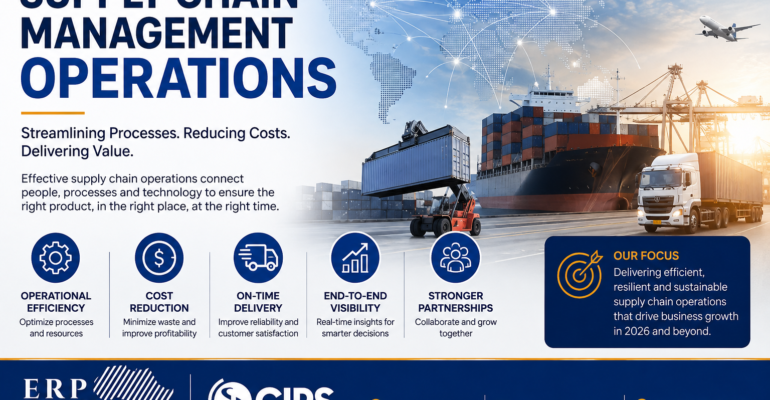
Supply chain management coordinates the flow of materials and information from raw materials suppliers through production, warehousing, transportation, and final delivery to end customers. Operations management focuses on internal processes and efficiency, ensuring that what happens inside factories, warehouses, and fulfillment centers runs on time and within budget. Together, supply chain and operations cover every handoff, from tier-1 suppliers to the moment a customer opens a package.
This article walks through the entire supply chain management process, from demand planning to performance measurement, in practical, business-focused language. Here is what you will learn:
How daily supply chain operations work in practice, including the tools, roles, and metrics involved.
How strategic decisions (network design, sourcing policy) differ from operational execution (production schedules, shipments) and why they must align.
What recent disruptions teach us about resilience, trade-offs, and risk management.
Where technology, people, and continuous improvement fit into the picture.
Global value chains account for around 70% of international trade, which means that the way companies manage these flows directly shapes competitiveness, profit margins, and customer satisfaction.
What Is Supply Chain Management Operations?
Supply chain management operations refers to the day-to-day planning, execution, and control activities that keep the supply chain running. This includes procurement of materials, scheduling of production, managing logistics inbound and outbound, fulfilling customer orders, and handling returns.
It is important to separate strategic supply chain management (decisions like where to build facilities, whether to outsource, and which markets to enter) from operational supply chain activities (daily scheduling, shipments, inventory moves). Strategy sets the playing field; operations play the game.
Consider a 2026 consumer electronics brand sourcing semiconductors from Taiwan and plastics from Southeast Asia, assembling in Vietnam, and distributing into Europe. On any given day, the operations team must track chip lead times (often exceeding 20 weeks during shortages), schedule production batches, coordinate with shipping lines, replenish warehouses, promise delivery dates, and process returns for defective units.
Scope: Procurement, production scheduling, inbound and outbound logistics, order fulfillment, reverse logistics.
Objectives: Minimize cost (procurement, inventory carrying, transport), maximize service levels (on-time delivery, fill rate), build resilience (buffer capacity, dual sourcing).
Typical KPIs: On-time in full (OTIF), order lead time, forecast accuracy, inventory turnover, supplier lead time adherence, capacity utilization, warehouse picking accuracy.
Core principle: Supply chain management aims to deliver products efficiently and cost-effectively, and cost reduction comes from eliminating waste and optimizing inventory, especially as supply chain management operations in 2026 focus on efficiency, resilience, and sustainability.
Components: Planning, sourcing, manufacturing, logistics, and returns management are the core components of supply chain management. It coordinates materials, data, and inventory movement across every node.
Operations Management vs. Supply Chain Management
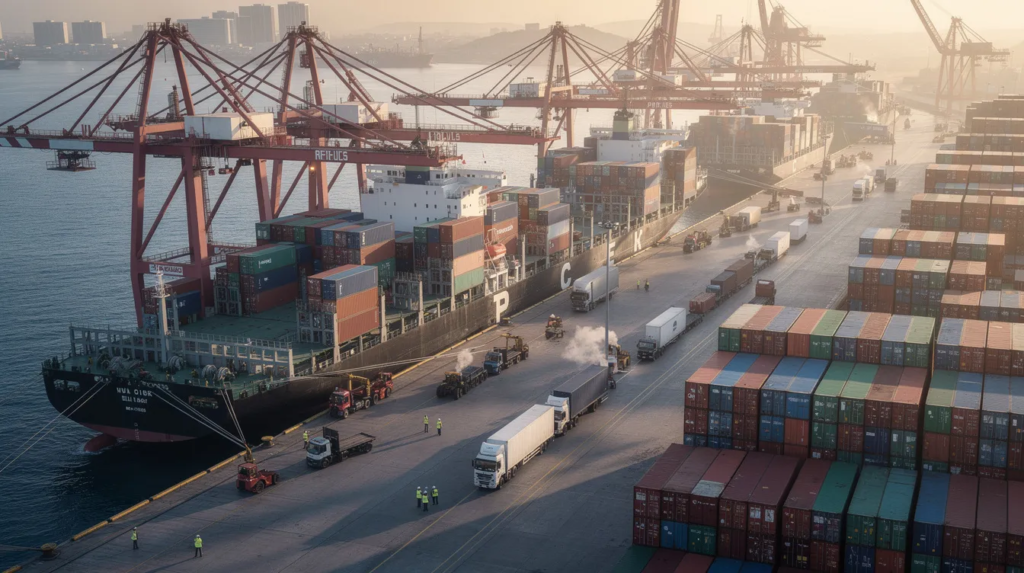
Operations management focuses on internal processes and productivity: manufacturing lines, quality control, capacity utilization, and shop-floor scheduling. Supply chain management oversees external supplier and logistics interactions, spanning partners, carriers, warehouses, and customer delivery. Operations management is part of the broader supply chain management process, but the two require different lenses.
Inside the facility, an operations coordinator and plant managers work on capacity, scheduling, and quality. Operations management ensures products are produced on time and efficiently, and it oversees manufacturing and warehousing facilities. Outside, the supply chain manager and logistics manager handle suppliers, warehouses, carriers, and cross-border flows. Operations managers coordinate with stakeholders to optimize processes on both sides of this boundary.
Here is how they compare in practice:
Scope: Operations management is internal (shop floor, lines, equipment capacity). Supply chain management is external (suppliers, carriers, distribution networks, customers).
Time horizon: Operations decisions happen daily to monthly. Supply chain planning extends monthly to multi-year (network design, sourcing strategy).
Main functions: Operations covers production scheduling, quality control, capacity management. Supply chain covers sourcing, logistics management, inventory across nodes, demand planning.
Typical decisions: Operations asks “which jobs run next?” and “how many shifts?” Supply chain asks “which suppliers?” and “which transport mode?”
Data used: Operations uses machine uptime, scrap rates, cycle times. Supply chain uses forecast data, lead times, freight costs, external risk indicators.
A cross-functional example makes this concrete. Suppose a company in September 2026 plans production for December holiday demand. Operations must schedule overtime and weekend shifts. But procurement had to order chips from Taiwan 14 weeks earlier. Meanwhile, shipping lines rerouting from the Red Sea add transit time and cost. If logistics capacity is constrained, promised delivery dates need adjusting. The decision requires integrating internal operations with external chain management. Operations management ensures timely delivery of goods and services only when it is aligned with the supply chain.
Main Functions in the Supply Chain Management Process
The supply chain management process breaks down into five main functions, each with specific operational tasks that drive what operations teams do every day:
Planning: Demand planning, Sales & Operations Planning (S&OP), setting inventory targets. This is where business goals meet resource allocation.
Sourcing: Issuing RFQs, negotiating contracts, supplier performance reviews, releasing purchase orders. Sourcing involves selecting reliable vendors for raw materials and components. Effective procurement involves finding reliable suppliers for materials, and procurement and contracting best practices alongside supplier relationship management enhance supply chain efficiency.
Production: Production scheduling, line balancing, quality control checks, maintenance planning. This is the manufacturing process in action.
Distribution: Transport planning, route optimization, warehouse operations (picking, packing, shipping). Distribution is getting the final product to consumers or businesses.
Returns: Reverse logistics flows, processing customer returns, recalls, refurbishing, disposal. Reverse logistics handles returned goods or items for recycling.
Modern business operations teams rely on integrated data across these functions, typically through ERP and SCM systems like SAP S/4HANA or Oracle Cloud SCM, so that inventory levels, forecast status, production schedules, and transport plans are visible in one place. Performance measurement and communication cut across all five functions and are covered in later sections.
Demand Planning and Forecasting in Daily Operations
Demand planning is the starting point for virtually every supply chain and operations decision. If demand is overstated, you produce too much and sit on excess inventory. If understated, you run out of stock, lose sales, and damage customer satisfaction. Planning anticipates customer demand and aligns resources accordingly.
By 2026, most companies run a monthly demand planning cycle: gathering point-of-sale data, running a statistical forecast (time-series models, sometimes machine learning), collaborating with sales and marketing to factor in promotions and product launches, and arriving at a consensus forecast that feeds into S&OP. Modern forecasting incorporates social media trends and economic indicators alongside traditional data. Some large companies analyze 130,000 SKUs with 200 influencing variables daily using advanced data analytics platforms. Companies using predictive analytics can identify demand shifts early, often before they show up in orders.
Consider a fast-moving consumer goods firm in South Africa forecasting a 30% demand spike for cold beverages during summer (December 2026 through February 2027). Based on that forecast, operations must plan additional production shifts, secure extra raw materials (sugar, packaging) well ahead, and arrange logistics so refrigerated trucks are available.
Key tools: Time-series models (ARIMA, exponential smoothing), demand sensing with real-time POS data, CRM pipeline inputs.
Pitfalls: Forecast bias (overly optimistic sales teams), difficulty modeling seasonality or external shocks, the bullwhip effect amplifying small demand changes into large supply chain swings.
Impact: Accurate forecasting prevents stockouts and excess inventory. Predictive analytics helps identify demand shifts before they impact operations. Poor forecasting drives expediting costs, obsolete stock, and service failures.
Master Planning, S&OP, and Production Planning
Master planning is the bridge between business strategy and detailed shop-floor schedules. It operates on a 12- to 24-month horizon and translates strategic objectives into volumes, capacity needs, and resource plans.
Sales and Operations Planning is typically a monthly cycle with structured steps: data review, demand plan, supply plan, pre-S&OP alignment of trade-offs, and executive approval. The output is a single set of numbers covering demand, capacity, inventory, and risk. Effective operations management improves efficiency and reduces costs when S&OP is disciplined and cross-functional.
The production plan then converts family-level volumes into required capacity, shifts, and subcontracting decisions. For example, a food manufacturer in 2025 must decide ahead of Easter demand (February–March 2026) whether to add a second shift in the bottleneck plant or outsource some production. Forecast shows 25% higher demand in certain product lines. Raw material lead times for sugar and packaging are unstable, so procurement must place orders three months ahead. The S&OP meeting brings together production, procurement, sales, and finance to balance cost of overtime versus subcontractor cost versus risk of running out.
Demand management: Forecasting, promotions, market intelligence.
Resource planning: Capacity, machines, labor.
Master scheduling: Deciding volumes by product family over coming quarters.
Capacity checks: Rough-cut capacity planning to validate feasibility.
Supply-demand balancing: Risk buffers, alternative supply, scenario modeling.
Master Scheduling, Order Promising, and Service Levels
The master production schedule converts aggregate plans into specific item-by-item, week-by-week production commitments. It is the plan that the shop floor follows.
Available-to-promise (ATP): Uses MPS, current inventory, and incoming supply to commit realistic delivery dates. If a customer asks for 500 units by December 15, ATP checks whether stock plus inbound shipments can cover it.
Capable-to-promise (CTP): Goes further by checking production capacity and material availability. You can only promise if you have both inventory and capacity.
Time fences: Frozen periods (near term, no changes), slushy periods (limited flexibility), liquid periods (far out, adjustable). These prevent constant changes that upset production processes, procurement, and logistics.
Service levels: OTIF, fill rate, and order cycle time are direct outcomes of how well master scheduling is managed. Poor promises lead to late deliveries and eroded customer trust.
Consider a mid-size electronics firm in November 2026 handling holiday demand. It sets a frozen period where no new large orders can change the schedule, uses ATP to promise end-of-December delivery only if inventory plus inbound shipments allow, and avoids overpromising by checking supplier lead times and transport capacity. Schedule changes during frozen time mean overtime, expedite freight, and excess costs.
Material Requirements Planning (MRP) and Inventory Control
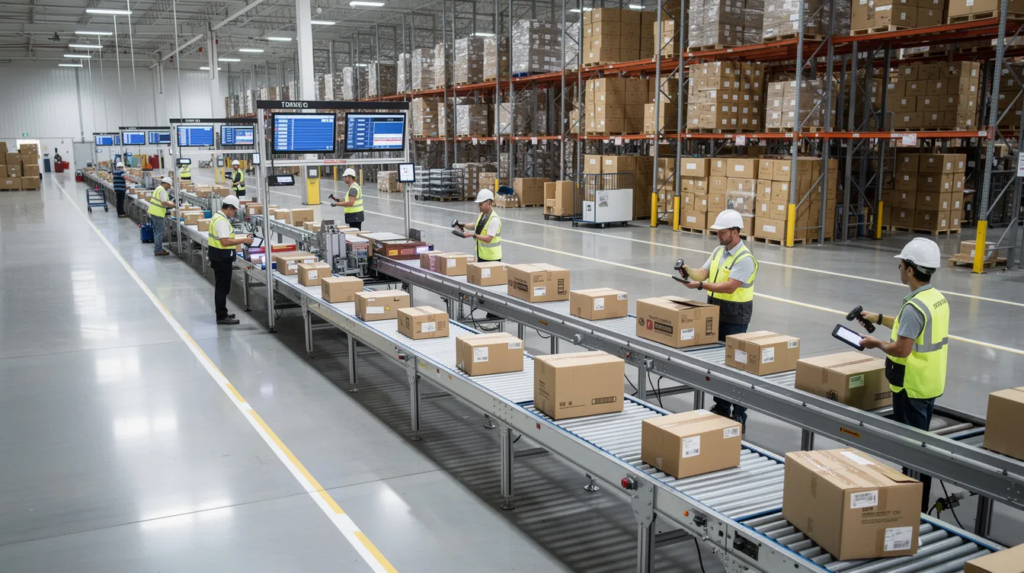
Material requirements planning is central to inventory control. It takes the MPS and “explodes” it through the bill of materials to determine time-phased requirements for every component, subassembly, and raw material.
Independent vs. dependent demand: Finished products (smartphones, for example) have independent demand driven by customer demand. Components (chips, screens, screws) have dependent demand derived from the finished goods schedule.
Core inputs: MPS, bills of material, inventory records, supplier lead times, lot sizes.
Core outputs: Planned orders (when and how much to order), rescheduling messages, shortage warnings.
Inventory policies: Safety stock buffers, reorder points, economic lot sizes, min/max levels. Just-in-time inventory strategies reduce carrying costs but require reliable suppliers. Companies use predictive analytics to optimize inventory levels and manage inventory effectively.
What goes wrong: If bills of material are inaccurate or inventory records are off, MRP generates wrong signals: stockouts halt production, excess inventory ties up working capital, and emergency air freight shipments blow through budgets.
Inventory management prevents stockouts and excess inventory when the underlying data is clean. Effective inventory management improves customer satisfaction because orders ship complete and on time.
Distribution, Logistics Operations, and Last‑Mile Delivery
Distribution requirements planning determines how inventory flows from central warehouses to regional distribution centers or retail stores. The logistics manager plays a key role in daily operations: route planning, carrier selection, freight tendering, tracking deliveries, and managing exceptions, and effective transportation in logistics has a direct impact on overall supply chain efficiency.
Replenishment models vary. A push model sends inventory to distribution centers based on forecast. A pull model triggers replenishment from actual store or customer orders (POS data). Most companies use a hybrid: push to regional DCs based on supply chain planning, pull to stores based on real-time sales.
Last-mile challenges have intensified from 2024 through 2026. Urban congestion, same-day delivery expectations, driver shortages, rising fuel prices, and emissions constraints all complicate final delivery. Fuel prices have increased operational costs across industries, forcing companies to optimize every route. Companies like P&G and Nestlé have adopted decision-centric planning tools that integrate scenario modeling for transport and inventory costs, helping them balance cost versus service trade-offs.
Technology adoption: Route optimization algorithms, dynamic dispatch, delivery planning apps, real-time tracking dashboards, cross-docking to reduce warehouse handling, supported by advanced supply chain logistics management strategies that leverage AI, IoT, and automation.
Sustainability angle: Some retailers embed carbon footprint data directly into distribution planning, optimizing routes to reduce CO₂ per delivery without sacrificing service levels.
Capacity Management, Constraints, and Shop‑Floor Control
Capacity management balances the load of work with available resources (people, machines, warehouse space, transport) across time horizons.
Rough-cut capacity planning (RCCP): Tests whether MPS volumes are feasible given major resource capacities. This is a medium-term check.
Capacity requirements planning (CRP): A detailed, work-center-level analysis that identifies bottlenecks in the manufacturing process.
Common capacity measures: Utilization (percent of time resources are busy), efficiency (output quality when busy), rated capacity (maximum designed output). Example: a work center with 160 hours available per week, utilized at 85%, gives 136 hours used. At 90% efficiency, actual productive hours are approximately 122.
Shop-floor control: Dispatching (which job runs next), sequencing (order of jobs), priority rules (earliest due date, shortest processing time). These decisions directly affect on-time delivery, lead time, and work-in-process inventory.
Realistic trade-offs arise constantly. Overtime increases labor cost and may reduce quality. Subcontracting adds flexibility but reduces control. Pushing line speed too high increases scrap and rework. Automation increases processing capacity by 300 to 500 percent in some facilities, but requires capital investment and workforce retraining. Operations teams must adjust dynamically when constraints appear: supplier delays, machine breakdowns, labor shortages.

People, Roles, and Careers in Supply Chain and Operations
The supply chain field offers a range of operational roles, each with distinct daily responsibilities:
Demand planner: Forecast demand, collaborate with sales and marketing, track forecast accuracy and bias. A critical function that feeds every downstream decision.
Production scheduler / master scheduler: Define detailed production schedules, sequence jobs, manage the MPS, coordinate with materials and capacity teams.
Operations coordinator: Bridge planning, procurement, production, and logistics. Resolve day-to-day exceptions, adjust schedules, expedite when needed. This role builds practical skills fast.
Supply chain manager: Oversee sourcing, logistics, transportation partnerships, coordinate suppliers across multiple nodes.
Logistics manager: Handle freight, carriers, warehousing, route planning, transport cost control.
Warehouse supervisor: Manage inbound/outbound flows, picking, put-away, inventory accuracy.
According to 2025 compensation data, U.S. demand planners earn roughly US$90,000–130,000 depending on seniority and region. Senior directors of planning and heads of operations can reach US$180,000–230,000+ at large companies. Entry-level roles like warehouse supervisor or operations coordinator typically range US$60,000–90,000.
Skills in high demand across all these roles: data analytics literacy, ERP proficiency, communication and cross-functional collaboration, problem-solving under pressure, understanding of performance measurement and service levels, and increasingly, sustainability knowledge. Supply chain professionals who combine technical depth with business acumen build a solid foundation for advancement.
Technology, ERP, and Data Visibility in Operations Management
Modern supply chain operations run on integrated technology stacks. ERP systems (SAP S/4HANA, Oracle Cloud SCM, Microsoft Dynamics) handle master planning, MPS, procurement, and finance. Manufacturing execution systems (MES) manage real-time shop-floor sequencing and line control. Warehouse management systems (WMS) track inventory, guide picking, and manage put-away. Transport management systems (TMS) plan shipments and optimize routes.
The difference between ERP and MES matters in practice. ERP handles planning and financial transactions. MES handles real-time machine-level and line-level control. When these systems integrate, data visibility improves dramatically. IoT sensors provide unprecedented operational visibility in supply chains, monitoring container temperature, humidity, and location. Barcode and RFID systems enable real-time scanning in warehouses. Dashboards update hourly for logistics lead times, production adherence, and inventory levels.
Cloud platforms dominate new supply chain software deployments, and cloud-based planning tools and supply chain control towers have become widespread since about 2022. These tools enable scenario modeling (what if a supplier delays, what if a shipping route closes), supporting faster decision-making for logistics managers and operations coordinators. Companies struggle with data quality issues in supply chain management, but digital transformation through integrated systems reduces reliance on disconnected spreadsheets. Modern supply chains emphasize real-time visibility and automated decision-making.

Performance Measurement, KPIs, and Continuous Improvement
Performance measurement is the backbone of controlling supply chain operations and driving continuous improvement. Without it, you are flying blind.
On-time in full (OTIF): The percentage of orders delivered complete and on schedule. The single most watched KPI.
Order cycle time: From order placement to final delivery.
Forecast accuracy / bias: How close demand planning gets to reality.
Inventory turnover: How many times inventory cycles through per year. Higher turns mean less capital tied up.
Capacity utilization and efficiency: Are you using what you have?
Warehouse picking accuracy: Errors here cascade into returns and customer complaints.
Transport cost per unit: Keeps logistics spending visible.
Dashboards and scorecards drive daily stand-ups and monthly reviews, aligning supply chain and operations teams around the same numbers. Metrics also feed incentives: bonuses tied to OTIF, penalties for late supplier deliveries, inventory holding cost linked to demand planners. A pharmaceutical firm in 2025 used root-cause analysis alongside OTIF tracking and reduced late orders by 20% within six months by drilling into supplier delays, transport exceptions, and internal quality rework. Performance trends over time reveal whether improvements stick or regress, providing valuable feedback to operations teams.
Risk Management, Resilience, and Sustainable Operations
Risk mitigation in supply chain management prepares organizations for market volatility and disruptions. The numbers back this up: 75% of businesses faced supply disruptions in 2024. Labor shortages are a major challenge in supply chain operations. Geopolitical instability complicates global supply chain operations, from trade wars to regional conflicts affecting shipping lanes. The semiconductor shortage of 2020–2023 demonstrated how concentration of capacity in a single region could ripple through automotive and electronics industries for years.
Practical resilience tactics include:
Dual sourcing: Having two suppliers for critical parts to coordinate suppliers and reduce single-point failures. Companies using supplier relationship management report improved negotiation outcomes and fewer disruptions. Strategic supplier partnerships require continuous performance monitoring. Effective supplier management reduces operational disruptions.
Safety stock at critical nodes: Buffer inventory where stockouts are most costly.
Alternative routes: Avoiding chokepoints like the Suez Canal when disruptions arise.
Flexible contracts with 3PLs: Ability to scale transport capacity up or down.
Cross-training workers: So key roles are covered during absences.
Sustainability and ESG pressures are now embedded in supply chain operations decisions. EU regulations like the Corporate Sustainability Reporting Directive require firms to trace sources, report Scope 3 emissions, and conduct due diligence. A paper and packaging company, VPK Group, embedded carbon footprint data directly into supply chain trade-offs, choosing transport modes and routes that reduce CO₂ per delivery while maintaining service levels. These are no longer optional considerations; they affect potential disruptions, brand reputation, and regulatory compliance.
Bringing It All Together: End‑to‑End Supply Chain Operations in Practice
Strategy, planning, sourcing, production, logistics, capacity, technology, and performance measurement are not independent silos. They form one coordinated system where a change in one area cascades through the others.
Walk through a concrete scenario: a mid-size consumer goods company plans a new product launch for Summer 2027. Demand planning projects strong customer demand in North America and Europe. S&OP determines required production capacity. Master scheduling breaks down family volumes into specific items and weeks. MRP identifies component lead times, and sourcing secures supplier relationships. Production schedules are set, and equipment capacity constraints are addressed. Distribution and logistics plans are made, including transport mode choices and warehouse positioning. Order promising is calibrated using ATP checks. Performance KPIs are established. Risk buffers (dual sourcing, safety stock) are included. Sustainability metrics shape packaging decisions. Returns handling is planned from day one.
The importance of integrating internal operations management with external chain management cannot be overstated. Without that integration, you get financial problems: excess costs from expediting, lost revenue from stockouts, damaged supplier relationships from erratic ordering, and eroded customer trust from late deliveries.
Whether you are pursuing a higher certificate in supply chain or leading manufacturing operations at scale, supply chain management courses in South Africa, logistics and supply chain management training, Certified Strategic Procurement & Supply Chain Management programs, broader supply chain management courses that transform your career, and certification pathways to become a supply chain manager all provide structured development. In particular, targeted programs that unlock opportunities in supply chain and management help professionals build resilience, digital skills, and procurement expertise. Here are the top priorities for improvement:
Clean up your data. Accurate bills of material, inventory records, and forecast history are non-negotiable. Everything downstream depends on data quality.
Strengthen S&OP discipline. Run it monthly, make it cross-functional, and hold leaders accountable for one set of numbers.
Build KPI dashboards. Real-time or daily reporting gives operations teams the visibility to act before small problems become big ones. Improve efficiency by measuring it.
Invest in cross-functional communication. The best technology in the world cannot compensate for business processes where operations, procurement, logistics, and sales do not talk to each other.
Mastering supply chain management operations is not about perfection. It is about building systems, skills, and habits that let you respond to demand changes, reduce costs, improve customer satisfaction, and turn the supply chain into a genuine competitive advantage.
Related Posts

CIPS November 2026 Exam Series: What You Need to Know
Study Supply Chain Management in South Africa: An Essential Guide

AI in procurement: Transforming sourcing and operations

Search
Categories
Latest Posts

CIPS November 2026 Exam Series: What You Need to Know
September 19, 2026
Is Supply Chain Management a Good Career Choice for Students?
September 11, 2026
Popular Tags