Logistics Courses: Unlocking Career Growth in Supply Chain Management
Introduction to Logistics Education
Understanding the Supply Chain Ecosystem
The supply chain ecosystem is complex, involving a range of stakeholders including suppliers, manufacturers, distributors, and retailers. Each link in this chain plays a crucial role in ensuring that products reach consumers efficiently. Understanding this ecosystem is essential for logistics professionals, as it helps them to identify challenges and opportunities within the supply chain.
For example, a logistics manager must coordinate between suppliers and warehouses to ensure that inventory levels are maintained. This requires knowledge of demand forecasting, inventory management techniques, and the ability to communicate effectively with various stakeholders. By studying logistics courses, professionals can master these skills and contribute to a more streamlined and responsive supply chain.
Technological Advancements in Logistics
With the rapid development of technology, logistics has become increasingly sophisticated. Innovations such as Artificial Intelligence (AI), Machine Learning (ML), and the Internet of Things (IoT) are transforming how logistics companies operate. For instance, AI can be used to optimize routing for delivery trucks, reducing fuel consumption and improving delivery times.
Consider the example of a retailer using IoT-enabled sensors to monitor inventory levels. The data collected can trigger automatic reordering, ensuring that stock levels are always optimal, thus preventing lost sales due to stockouts. Logistics professionals must understand how to implement and manage these technologies to drive efficiency and effectiveness in supply chain operations.
The Importance of Sustainability in Logistics
As environmental concerns grow, sustainability has become a key focus in logistics. Companies are increasingly seeking ways to reduce their carbon footprint and operate more sustainably. This includes optimizing transport routes to minimize emissions, utilizing eco-friendly packaging, and investing in renewable energy sources.
Logistics courses that emphasize sustainability prepare professionals to address these challenges effectively. For example, they might cover best practices in green logistics, such as the implementation of electric delivery vehicles and the use of alternative fuels.
Moreover, IoT devices help track shipments in real-time, providing valuable data that can be analyzed to improve operational efficiency. Logistics courses often cover these technologies, ensuring that professionals are prepared to leverage them in their careers.
Moreover, understanding regulatory frameworks related to environmental policies can give logistics professionals a competitive edge. They can ensure compliance while promoting sustainable practices that attract environmentally conscious consumers.
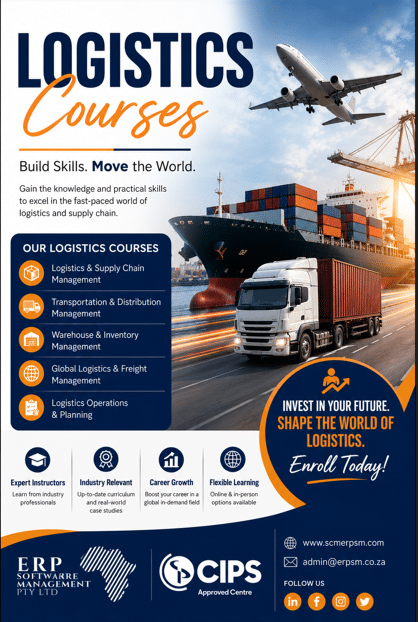
Logistics is the backbone of global trade, connecting transportation, warehousing, procurement, and supply chain management. With industries expanding across Africa, Asia, and Europe, professionals are seeking logistics courses that provide practical skills, certifications, and career advancement opportunities.
Keywords included: logistics courses, supply chain management training, procurement and logistics certification, ERP logistics integration, international trade logistics, sustainable logistics Africa.
Why Logistics Courses Matter in Today’s Economy
The Role of Logistics in Global Trade
Logistics ensures that goods move efficiently from suppliers to customers. From last‑mile delivery solutions to international shipping compliance, trained professionals are essential for reducing costs and improving customer satisfaction.
Career Opportunities in Logistics
Graduates of logistics courses can pursue careers in:
- Supply Chain Management
- Procurement & Vendor Risk Management
- ERP & SAP Logistics Integration
- Warehouse & Inventory Control
- Transportation Planning
Short‑tail keywords: logistics, supply chain, procurement. Long‑tail keywords: logistics training South Africa, certified supply chain leader course, ERP logistics integration training, sustainable transportation Africa.
This hands-on experience is invaluable, as it prepares students for the unpredictable nature of logistics and supply chain management. Employers highly value graduates who can demonstrate their ability to apply knowledge in practical situations.
Types of Logistics Courses
Certificate Programs
Short‑term certifications such as Certified Supply Chain Leader (CSCL) or Certified Stores & Stock Controller (CSSC) provide foundational knowledge.
Real-world Applications of Logistics Knowledge
Logistics courses not only provide theoretical knowledge but also emphasize real-world applications. Students often engage in case studies and simulations that reflect current industry challenges.
For instance, a course may present a scenario where a company faces a supply chain disruption due to a natural disaster. Students would work collaboratively to develop response strategies, demonstrating the application of their learning in crisis management.
Diploma & Degree Programs
Institutions like Vcare Academy and SCM ERPSM Training Centre offer diplomas in Supply Chain Logistics Management, combining theory with practical ERP simulations.
Specialized ERP & SAP Logistics Training
Courses in SAP HANA, SAP Finance, and ERP integration prepare professionals for enterprise‑level logistics operations.
SCM ERPSM Training Centre — offering ERP & logistics training across Africa.
Benefits of Logistics Courses
Skill Development
- Vendor Risk Management
- Cybersecurity in Logistics Systems
- Zero Trust Segmentation for ERP Platforms
Impact of Globalization on Logistics Education
Globalization has significantly influenced logistics education. As businesses expand internationally, they require professionals who understand global supply chain dynamics. This includes knowledge of international trade regulations, customs procedures, and cross-border logistics.
Logistics courses that focus on globalization prepare students to navigate these complexities. They often include modules on the intricacies of global sourcing strategies and the importance of cultural competencies in international business dealings.
Career Advancement
Employers value certifications like CompTIA Security+ and SAP Logistics for roles in supply chain security and ERP consulting.
Industry Recognition
Membership in professional bodies such as ICITP South Africa enhances credibility.
Logistics Courses in Africa
South Africa
South Africa is a hub for logistics training, offering courses in procurement, ERP, and cybersecurity awareness.
Nigeria
Institutions deliver cybersecurity‑focused logistics training, preparing professionals for digital supply chain challenges.
India & Asia
Future Trends in Logistics and Supply Chain Management
The Value of Networking in Logistics
Leveraging Social Media for Professional Growth
In today’s digital age, social media platforms can be powerful tools for logistics professionals. LinkedIn, for example, allows individuals to showcase their skills, connect with potential employers, and participate in industry discussions. Many logistics courses provide guidance on how to effectively use social media for career advancement, teaching students how to create a professional online presence that attracts opportunities.
Networking is critical in the logistics industry. Building relationships with industry professionals can lead to job opportunities, mentorship, and valuable insights into industry trends. Many logistics courses encourage students to participate in networking events, trade shows, and professional associations to build their connections early in their careers.
For instance, attending conferences can expose students to key industry leaders and innovative companies pushing the boundaries of logistics. These connections can be instrumental for recent graduates entering the workforce, providing them with guidance and support as they navigate their early careers.
As the logistics field continues to evolve, staying abreast of future trends is critical. The rise of e-commerce has transformed consumer expectations, leading to increased demand for faster and more efficient delivery solutions. Logistics courses that incorporate trends such as drone delivery, autonomous vehicles, and last-mile logistics strategies are crucial for preparing the workforce of tomorrow.
Furthermore, the integration of blockchain technology in logistics is gaining momentum, providing enhanced transparency and traceability in supply chains. Professionals with knowledge of these technologies will be well-positioned to lead in the industry.
Global academies provide international trade logistics certifications, enabling cross‑border career opportunities.
How to Choose the Right Logistics Course
Accreditation
Ensure the course is recognized by global supply chain bodies like CIPS and Vcare Academy
Practical Training
Look for programs with ERP simulations, case studies, and live projects.
Career Path Alignment
Choose a course that matches your career goals- whether in procurement, ERP consulting, or supply chain security.
Conclusion
Logistics courses are more than academic programs — they are gateways to global career opportunities. With the right mix of certifications, ESG training, and supply chain knowledge, professionals can thrive in industries from manufacturing to e‑commerce. A comprehensive understanding of logistics principles and practices ensures that individuals are equipped to tackle the challenges of the modern supply chain, positioning them for long-term career success in a dynamic and evolving field.
FAQs on Logistics Courses
Q1: What are logistics courses?
A: Programs designed to train professionals in supply chain management, procurement, ERP integration, and transportation planning.
Q2: Are logistics courses useful for career growth?
A: Yes, they open opportunities in supply chain consulting, ERP systems, and vendor risk management.
Q3: Which logistics certifications are most valuable?
A: CSCL, CSSC, CPIA, and SAP Logistics certifications are highly recognized.
Q4: Can logistics courses be studied online?
A: Many academies, including SCM ERPSM Training Centre, offer online and hybrid options.
Q5: What industries need logistics professionals?
A: Manufacturing, retail, e‑commerce, healthcare, and international trade.
Q6: How long does a logistics course take?
A: Certificates may take 3–6 months, while diplomas and degrees can span 1–3 years.
Q7: Are logistics courses expensive?
A: Costs vary, but many institutions offer affordable online programs with flexible payment options.
Q8: Do logistics courses include ERP training?
A: Yes, advanced programs often integrate SAP HANA, SAP Finance, and ERP logistics modules.