Manager Course: Building Future‑Ready Leaders

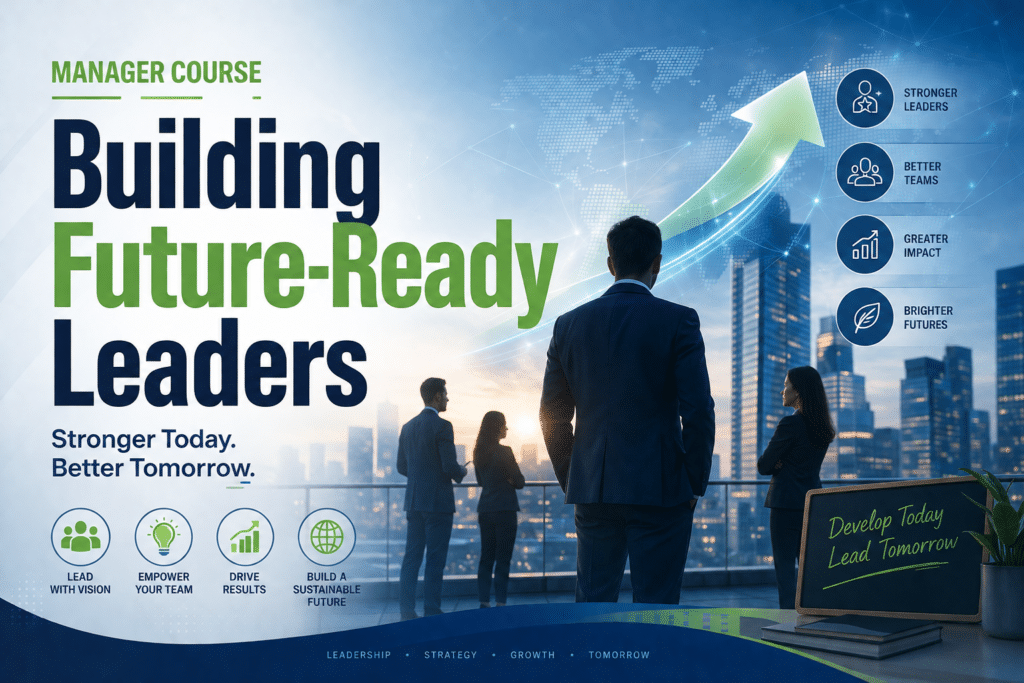
In today’s competitive corporate environment, managers are more than supervisors — they are strategic leaders who drive performance, innovation, and resilience. A well‑structured Manager Course equips professionals with the skills to lead teams, manage resources, and align operations with organizational goals. This course not only sharpens managerial skills but also enhances critical thinking, enabling leaders to navigate complex challenges effectively. By investing in a manager course, organizations prepare their leaders for future uncertainties and equip them with tools for sustainable growth in a rapidly evolving marketplace.
Why Manager Training Matters
In the contemporary corporate landscape, the role of managers transcends traditional boundaries. Managers are the bridge between executives and employees. Their decisions influence productivity, culture, and profitability. Without proper training, organizations risk inefficiency, disengagement, and high turnover. When managers lack the necessary skills, it can lead to poor team dynamics and misalignment with strategic objectives, which ultimately hampers organizational performance. Furthermore, research indicates that well-trained managers can significantly enhance employee morale and retention, thus fostering a more motivated workforce.
Managers are the bridge between executives and employees. Their decisions influence productivity, culture, and profitability. Without proper training, organizations risk inefficiency, disengagement, and high turnover.
A Manager Course provides:
- Leadership skills → motivating and guiding teams.
- Operational knowledge → aligning processes with corporate strategy.
- Risk awareness → identifying and mitigating business threats.
- Digital fluency → leveraging ERP, AI, and analytics for smarter decisions.
Core Modules in a Manager Course
The core modules of a manager course are designed to cover a comprehensive range of topics that are crucial for effective management. These modules not only provide theoretical knowledge but also practical insights that can be applied in real-world scenarios. Below are the key modules included in a typical manager course:
1. Leadership & People Management
This module focuses on developing leadership qualities that are essential for managing teams effectively. Participants learn about emotional intelligence, which helps them understand and manage their emotions and those of others. This understanding is crucial for building strong team relationships and fostering a positive work environment. Additionally, conflict resolution strategies are explored, equipping managers with the skills to handle disputes and maintain harmony within teams. The module also emphasizes the importance of building inclusive, high‑performance cultures where every team member feels valued and motivated to contribute to their fullest potential.
- Emotional intelligence and communication.
- Conflict resolution and team motivation.
- Building inclusive, high‑performance cultures.
2. Strategic Planning & Decision‑Making
Strategic planning is a vital skill for managers as it involves setting measurable goals that align with the company’s long-term vision. In this module, participants learn how to create strategic plans that not only outline goals but also detail the steps necessary to achieve them. This process includes aligning departmental objectives with corporate vision and using data analytics for informed decisions, ensuring that managers can make choices that drive their teams and organizations toward success. Understanding how to analyze market trends and integrate these insights into strategic planning is also highlighted, providing managers with a competitive edge.
- Setting measurable goals.
- Aligning departmental objectives with corporate vision.
- Using data analytics for informed decisions.
3. Operations & Resource Management
This module covers the essentials of operations and resource management, ensuring that managers can efficiently oversee their teams and projects. Participants gain insights into the basics of supply chain and procurement, learning how to optimize processes to enhance productivity. ERP integration is also a key focus, as managers learn how to utilize these systems for better visibility and efficiency in their operations. Additionally, vendor risk management is discussed, providing managers with tools to identify potential risks in the supply chain and develop strategies for resilience.
- Supply chain and procurement basics.
- ERP integration for visibility and efficiency.
- Vendor risk management for corporate resilience.
4. Digital Transformation & Innovation
In the age of technology, understanding digital transformation is essential for managers. This module explores how to leverage AI tools for productivity enhancements and the importance of cybersecurity awareness for managers to safeguard their organizations. Participants also learn about driving innovation through technology adoption, which encourages creative thinking and the implementation of new ideas that can lead to significant business improvements. The module emphasizes the need for continuous learning and adaptation in response to technological advancements, preparing managers to lead their teams in a digital-first world.
- Leveraging AI tools for productivity.
- Cybersecurity awareness for managers.
- Driving innovation through technology adoption.
5. Corporate Governance & Compliance
Understanding corporate governance and compliance is crucial for effective management. This module delves into ESG frameworks and their impact on organizational strategy. Managers learn about regulatory compliance in procurement and finance, ensuring they understand the legal and ethical obligations of their roles. Ethical leadership and transparency are also key components of this module, as managers are trained to prioritize integrity in their decision-making processes. This knowledge not only protects the organization but also builds trust with stakeholders, including employees, clients, and the community.
- Understanding ESG frameworks.
- Regulatory compliance in procurement and finance.
- Ethical leadership and transparency.
Benefits of a Manager Course for Corporates
Investing in a manager course brings numerous benefits to organizations. First and foremost, improved productivity is a key advantage, as trained managers streamline workflows and optimize team performance. Additionally, strong leadership significantly enhances employee engagement, which is essential for reducing turnover and fostering a loyal workforce. Training also plays a crucial role in risk reduction, as managers are better equipped to identify potential threats early and implement effective mitigation strategies. Furthermore, digital readiness is enhanced as managers learn to adopt ERP and AI tools effectively, contributing to operational efficiency. Ultimately, strategic growth is achieved as leadership aligns operations with corporate goals, driving the organization forward.
- Improved Productivity → trained managers streamline workflows.
- Employee Engagement → strong leadership reduces turnover.
- Risk Reduction → managers identify threats early.
- Digital Readiness → managers adopt ERP and AI tools effectively.
- Strategic Growth → leadership aligns operations with corporate goals.
Statistics That Matter
Statistics highlight the significant impact of manager training on organizational success. Companies with trained managers see 20% higher productivity, demonstrating the direct correlation between effective management and operational efficiency. Leadership development initiatives have been shown to reduce turnover by 30%, emphasizing the importance of investing in human capital. Furthermore, ERP adoption led by managers improves resource visibility by 40%, facilitating better decision-making processes. A notable 70% of corporates cite manager training as critical for resilience, showcasing its essential role in navigating today’s challenging business environment.
- Companies with trained managers see 20% higher productivity.
- Leadership development reduces turnover by 30%.
- ERP adoption led by managers improves resource visibility by 40%.
- 70% of corporates cite manager training as critical for resilience.
Helpful Links
For those interested in enhancing their managerial skills further, the following resources are recommended:
- Explore CIPS Procurement Training
- Learn ERP integration for managers